


Healing from Narcissistic Abuse
Recognizing Narcissistic Abuse Trauma
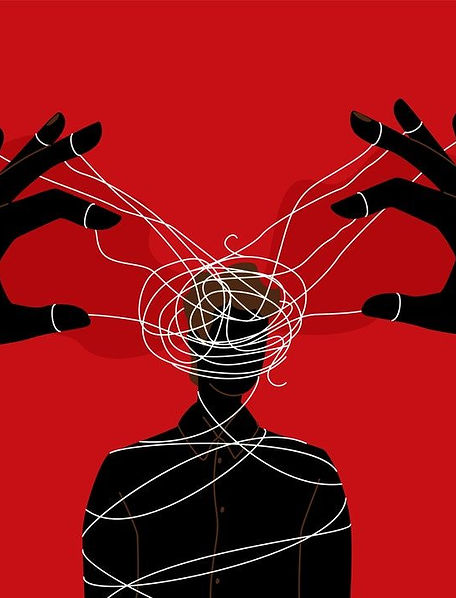
Narcissistic abuse is a popular topic on social media signifying people across the globe are recognizing the toxic patterns in their life and are searching for ways to heal the scars left from that abuse to move on. There are also those who’ve experienced the trauma of narcissistic abuse yet are blind to that being the root of feeling stuck in life.
Some can’t acknowledge these traumas and trauma response behaviors because the abusive acts have been so decontextualized from their source, that we chalk them off as personality or familial traits, or simply culture. For instance, in some cultures it’s common to hear of people fearing one or more of their parents for various reasons. That’s a trauma response. Also, having to live up to familial or cultural expectations, or continued participation in a religion that no longer fulfills deeper spiritual needs all create trauma.
For those of you who aren’t sure if you’ve ever experienced emotional abuse, ANYONE OR ANYTHING IN YOUR LIFE THAT MANIPULATES OR MOTIVATES YOU WITH GUILT, SHAME, OR INSULTS IS ACTING ABUSIVELY.
If you’re the black sheep or scapegoat of the family, and holiday gatherings are a nightmare, there’s a narcissistic dynamic in there.
If your faith includes, sin, hell, or worship, or you believe your ‘God’ doesn’t love you exactly as you are, your soul has experienced a type of narcissistic abuse.
What Are the Red Flags of Narcissistic Abuse in a Relationship?
Some of the common red flag behaviors of a narcissist in abusive relationships are:
-
They often rage
-
Nothing is ever their fault
-
They gaslight you that you don’t remember events correctly
-
Can’t take criticism
-
Reverse blames you
-
Everything has to be about them
I know because I was one of those blind to the toxic behavior towards me growing up. It took me 20 years to figure out I was the victim of what psychologists call a narcissistic smear campaign, waged by a family member.
Why is Healing from Narcissistic Abuse So Challenging?
Narcissistic emotional abuse can be a challenging recovery because there are many toxic factors intertwined in the psyche, but it’s certainly an achievable goal. I’ve been able to heal to a point where I feel I’m no longer in survival mode and can enjoy life more. Yet there’s still much to gain from continued healing.
All that abuse destroys the ego, creating beliefs of worthlessness and not being enough, which disconnects us from our inherent spirituality of self-love. We’ve become so untrusting of our own intuition, we develop Learned Helplessness, and can’t make any decisions alone.
What Does Narcissistic Abuse Do to Your Brain and Nervous System?

Because narcissistic abuse dysregulates your brain and nervous system, many survivors can develop CPTSD, keeping them trapped in survival mode, overwhelmed by the fight or flight trauma cycle.
The first step to healing is going out and asking for help, but abuse survivors find it difficult to do from not feeling worthy of it and having distrust for authority. And as crazy as it sounds, the ego doesn’t like change, preferring the known current unhappiness to a happier future that’s a frightening unknown. This can cause self-sabotage of personal growth.
Another challenging aspect to healing from narcissistic abuse is that it requires allowing oneself to release any self-pity caused by the broken ego to allow the authentic self to emerge. That means you no longer see yourself as a victim, but as a survivor. To get there requires finding forgiveness for self and others.
Forgiveness isn’t about condoning toxic behavior, but the release of all the guilt and shame created by it. It’s about understanding that the abusers were abused themselves, continuing the cycle of abuse. It’s about understanding that as humans, we share the same traumas, and simply by developing a bit of empathy and compassion shows a big step towards healing.
Something that makes forgiveness easier to accept is understanding we aren’t humans with souls, but souls having a human learning experience. When you frame your past experiences as a ‘soul lesson,’ you can ask yourself: What have I learned about myself from the abuse?
But the most devastating reality for a narcissistic abuse survivor to face is that they cannot fully heal with the abuser in their life. Right now that prospect feels frightening, especially if the abuser is your boss or co-worker. Good news is there are many other practices to proceed with the healing journey, that strengthen connection to self-love in other areas of life. When you start finding self-love in other aspects of life, you can gain the self-empowerment to finally set clear and healthy boundaries.
How Do You Begin Rebuilding Your Self-Worth After Narcissistic Abuse?
The place to start healing is to sit down and figure out who you are not, and what your true self has come here to be. The life you’ve been living with all the anxiety, catastrophic thoughts, autoimmune disease, chronic fatigue and deep loneliness is through your survival personality, not who you truly are. Who is YOU 2.0 living the life of your dreams surrounded only by people who support you dearly? What does that feel like in the body? Where do you feel it? Are you living in the same place or have you moved to the place of your dreams? What does the food taste like there?
Keep in mind, you can change your goal at any time as you gain glimmers of the vast possibilities that suit the new you. As long as you have a direction to move in at the start, you don’t have to worry about how you get there. Envision the life your soul dreams to express, and I can help get you there.
Your Trauma Healing Journey Offers a Spiritual Path to Narcissistic Abuse Recovery
I’ve compiled the healing process that worked to get my head above water, in a new book, Your Trauma Healing Journey: Lifeprint Reiki’s Guide to Reconnect to Self-Love. Although not geared exclusively towards narcissistic abuse survivors, because the book is written by one, you’ll certainly find it a revelation.
Sometimes simply reframing how we examine a past experience can begin to release the emotional intensity. For example, none of your experiences were your fault, And it’s actually not the abuser’s fault, as they too are survivors of abuse and neglect. (if that statement enrages you it’s a perfectly normal response for someone who hasn’t begun the self-growth process)
Gaining self-awareness is key to personal growth, and this book will help you to identify your survival personality’s thoughts and behaviors so you can find acceptance for them as well. Remember, our survival personality is nothing to be ashamed of, since it wasn’t our fault it was created.
The healing process involves a variety of simple exercises to gain self-awareness. Journal prompts are provided as a key component to get the most out of every chapter, as well as real-life exercises and personal challenges.
Also important is learning my 11 Insights to Happiness. When you understand that much of your unhappiness comes from trying to control things that are uncontrollable, you can see why learning how to surrender is so important to mental health. When you understand that nothing is inherently ‘good’ or ‘bad,’ but that designation is simply an ego judgment, you have the availability to rise above challenging situations. Or learning how to develop stronger inner validation, since external validation from others is uncontrollable. There are eight more insights like that in the book.
Remember, the you that you desire to be only exists outside of your comfort zone.
If you have any questions, you know where to find me.
Good luck!!
Frequently Asked Questions About Narcissistic Abuse Recovery
- 01
- 02
- 03
- 04
- 05
- 06
- 07
- 08